
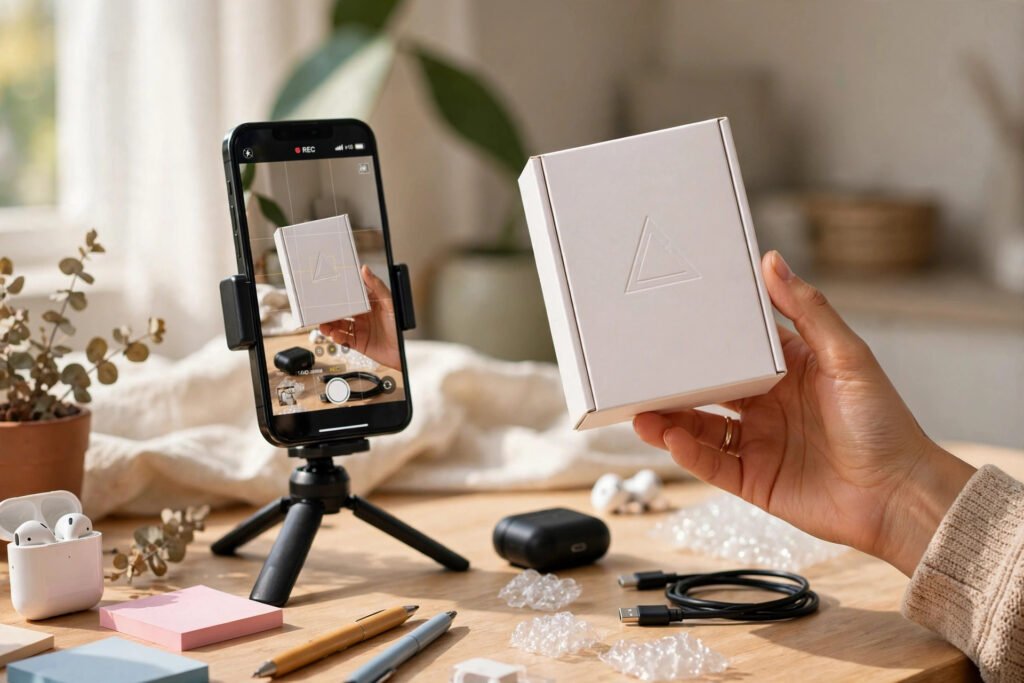
UGC is the highest-converting ad format on the internet right now. Not close, either.
A shaky, authentic-looking clip from a “real customer” will outsell a polished brand commercial ten times out of ten on TikTok and Reels. Brands know it — that’s why they pay UGC creators thousands per video. And here’s what most people haven’t clocked yet: with AI video tools, you can produce UGC-style clips without filming a single frame. Then use them to drive affiliate commissions.
I’ve been making and testing video ads for years. Watched the whole UGC wave from the start. So in this guide I’m showing you what AI UGC actually is, why it converts for affiliates, how to script and generate clips that feel real — and where the whole thing breaks down. Because it does break down. You need to know where before you waste a month.
What “AI UGC” Actually Means (and What It Doesn’t)
Definitions first, because “AI UGC” gets thrown around like confetti.
Traditional UGC = content made by real customers. Unboxings. Testimonials. “Get ready with me” clips. Honest reviews. It works because it doesn’t look like an ad. It looks like someone who bought the thing and liked it enough to yap about it.
AI UGC = that same style, but the footage is AI-generated. The “customer” might be synthetic. The product shots generated. The “unboxing” never physically happened. What stays human: the script, the strategy, your understanding of the product, and every editing decision.
What it does not mean? Fully automated money-printing. I have to kill that fantasy early because it’s everywhere — usually attached to a course upsell. AI UGC still needs you to understand the product, write a convincing script, direct the generation carefully, edit ruthlessly, and test. The AI replaces the camera and the actor. It does not replace the marketer. Not even close.
And an ethical line, because this matters: AI UGC still has to be honest. Product’s bad? Don’t pretend it’s good. Can’t verify a claim? Don’t make it. Generated footage showing a fake “result” — a before/after that never happened, a demo of something the product can’t actually do — that’s not clever marketing. That’s deception. It’ll get your accounts banned and your reputation torched. The FTC doesn’t care if your footage was filmed or generated; false claims are false claims.
Why UGC-Style Beats Polished Ads for Affiliates
I’ve run both. Polished, commercial-looking affiliate videos? Scrolled past. UGC-style clips? Watched. The psychology is simple — I’ve seen it play out hundreds of times:
- Pattern interrupt. Feeds are drowning in polished ads. A clip that looks like a real person talking to their phone breaks the pattern. The brain flags it as “person, not ad” and keeps watching. That split-second decision is everything.
- Parasocial trust. People trust “someone like me” more than a brand. UGC borrows that trust. Even when viewers suspect AI involvement, a natural, specific, non-salesy delivery still beats a commercial read. Every time.
- Native fit. UGC-style clips don’t look weird in a TikTok or Reels feed. Polished ads scream “I’m interrupting your scrolling!” Native-feeling content gets three seconds of benefit-of-the-doubt. Three seconds is all you need — if your hook is right.
- Volume economics. Brands pay $150–$500+ per traditional UGC video — typical market rates I’ve seen, not a promise of anything. AI UGC costs a fraction of that to produce. So you can test ten angles for the price of one filmed video. And testing is where the money is. The first version is almost never the winner.
For affiliates there’s another edge nobody talks about: no brand approval bottleneck. A brand’s UGC creator follows the brief. You? You’re an affiliate. Test whatever angle you want. Kill losers fast. Scale winners. No permission needed.
The Anatomy of a Converting AI UGC Clip
After making and analyzing way too many of these, the converting ones all share the same skeleton. Here’s the anatomy — timing for a typical 30–45 second clip:
0:00–0:03 — The hook. One sentence. Stops the scroll. Not “Hey guys, today I want to talk about…” — that’s death, instant skip. Instead: a bold claim, a surprising visual, a blunt problem. “I wasted $200 on skincare before finding this $18 thing.” The hook makes a promise. The rest of the video keeps it.
0:03–0:15 — The problem. Agitate the pain point. Be specific. “My back hurt every single morning for two years” beats “back pain is bad” — obviously, but people still write the generic version. Specificity is what makes it feel real instead of scripted. And specificity is exactly where most AI UGC dies, because generic scripts produce generic pain points.
0:15–0:30 — The product in action. Show, don’t tell. This is where AI generation earns its keep: product close-ups, “unboxing” sequences, before/after style demonstrations, lifestyle shots of the product in use. But — and this is key — the footage should feel handheld and imperfect. Slightly shaky. Natural light. Real-world mess in the background. Overly perfect renders scream “ad” and the spell breaks.
0:30–0:40 — The verdict. Your honest take. And include one small caveat — “it’s not perfect, the battery could be better, but for the price…” This is the single most trust-building move in the entire video. Perfect reviews feel fake. One honest flaw makes everything else believable. I can’t stress this enough.
0:40–0:45 — The CTA. “Link below if you want to try it.” Short. Casual. Not desperate. And your affiliate disclosure should’ve already appeared earlier — see my FTC disclosure guide. Non-negotiable.
Scripting Like a Real Customer, Not a Commercial
This is the skill. The one that separates converting AI UGC from obvious ads. And it’s 100% human work — the AI cannot do this part for you, no matter what the tool marketing says.
Here’s what I’ve learned about writing scripts that feel real:
- Write how people talk. Read your script out loud. Out loud! If no human would say that sentence to a friend, rewrite it. “This revolutionary device leverages cutting-edge technology” — nobody talks like that. Ever. “This little thing actually works, I was surprised” — that’s a human being.
- Specific numbers. Specific details. “I’ve used it every morning for three weeks” beats “I’ve been using it for a while.” “Took about four days to notice a difference” beats “results may vary.” Specifics signal real experience. (And obviously — only claim what you can actually stand behind.)
- Include the “but.” Every real customer has a “but.” “It’s great, but the app’s a bit clunky.” “Love it, but wish it came in more colors.” That one imperfection is worth more than ten compliments. I mean it.
- Say the product name early. Don’t make viewers wait 20 seconds to learn what you’re even talking about. Front-load it.
- Short sentences. UGC delivery is punchy. Long, winding sentences sound scripted even from a real person — and doubly scripted from a synthetic presenter. Chop them up.
I storyboard every UGC clip before generating. Even the 30-second ones. Takes ten minutes and prevents the aimless, rambling footage that kills conversions dead. My storyboard-first workflow works for short clips just as well as longer pieces.
Keeping the Product Consistent Across Takes
Here’s a technical headache you’ll hit immediately: AI generators don’t naturally keep your product looking the same across shots. The bottle changes shape between cuts. Label text melts into gibberish. Colors drift. For UGC — where the entire premise is “this is a real product I really used” — inconsistency destroys credibility instantly. One weird frame and the viewer knows.
How I deal with it:
- Reference images are everything. Get one clean product image — generate it or source it — then feed it as a reference for every single shot. Tools like Seedance let you input multiple references. Use that feature. Same product photo in, consistent product out.
- Lock your hero shot. The main product close-up? Generate it once, get it right, reuse it. Don’t regenerate five times hoping for “variety.” You’ll get inconsistency instead. Variety is the enemy here.
- Packaging text is the enemy. AI still butchers small text. Product has a label? Keep it out of focus, shoot angles where text isn’t legible, or fix it in post. I’ve started prompting “label slightly out of focus” or “shallow depth of field on packaging” — sidesteps the gibberish entirely.
- Hands. Ugh, hands. AI hands holding products are still unreliable. Prompt for simple grips. Avoid complex finger stuff. Check every frame. A six-fingered hand in your “authentic” UGC clip is… not authentic. Ask me how I know.
Where AI UGC Falls Apart (and How to Hide It)
Honesty time. The failure modes I’ve actually seen, and what to do about each:
The uncanny presenter. AI avatars and synthetic talking heads still creep out a real chunk of viewers. Using a presenter? Keep takes short. Avoid extreme face close-ups. Or — my preference — use voiceover over B-roll instead of a talking head at all. Product footage + voiceover converts just as well for most affiliate niches, in my experience. And it dodges the uncanny valley completely.
Physics fails. Liquid pours wrong. Fabric moves like plastic. Objects clip through each other impossibly. Watch every generated clip at full speed before it goes anywhere near your timeline. Something looks off? Regenerate with a simpler prompt. Complexity is where physics breaks — simplify and it usually behaves.
The “too perfect” problem. Funny one. AI footage can look too clean for UGC. Real UGC has noise. Imperfect light. Background clutter. So I deliberately prompt for imperfection: “shot on phone, natural window light, lived-in background, slight handheld shake.” Feels backwards, asking the AI for worse quality. But “worse” reads as “real.” That’s the game.
Repetitive outputs. Generate ten clips from similar prompts, they start looking samey. Same room, same light, same framing. Vary deliberately — different rooms, different times of day, different camera angles. Your audience sees these clips in sequence. Sameness kills the illusion that this is a real person’s varied life.
Posting, Testing, and Reading the Numbers
Making the clip is half the job. The other half:
Post natively. Don’t just cross-post the same file everywhere without thinking. TikTok wants 9:16, punchy, trend-aware. YouTube Shorts rewards a bit more substance. Reels sits somewhere between. I re-edit rather than re-upload — different hook, different caption, different hashtags. Takes an extra twenty minutes. Worth it.
Test angles, not just videos. Same product, ten ways to sell it: budget angle, premium angle, problem-solution, comparison, “things I wish I knew.” Each angle = a different video. I test at least 3–4 angles per product before I decide anything. Most people test one and quit. Don’t be most people.
Read the right numbers. Views are vanity. What actually matters: click-through rate on your link (are people curious enough to click?) and conversion rate (do clickers buy?). A video with 5,000 views and 100 link clicks destroys a video with 100,000 views and 10 clicks. Your affiliate dashboard tells the truth your view count won’t.
Kill fast. Scale winners. Video dead after 48 hours, no engagement? Move on. Don’t keep tweaking a corpse. But an angle shows life? Make five more variations immediately while it’s hot. Speed of iteration beats perfection of any single video. And this — this is the real AI UGC advantage. When a winner emerges, you flood the zone with variations in days. Not weeks. Days.
AI UGC for affiliate marketing isn’t a magic trick. It’s a production advantage applied to the oldest format that works: a believable person recommending something they like. Get the honesty right. Get the scripting right. Let the AI handle the part that used to need a camera crew.
Start with my beginner explainer if you need the foundations first. Then go make ten clips. The first five will teach you more than any guide ever could — including this one.