
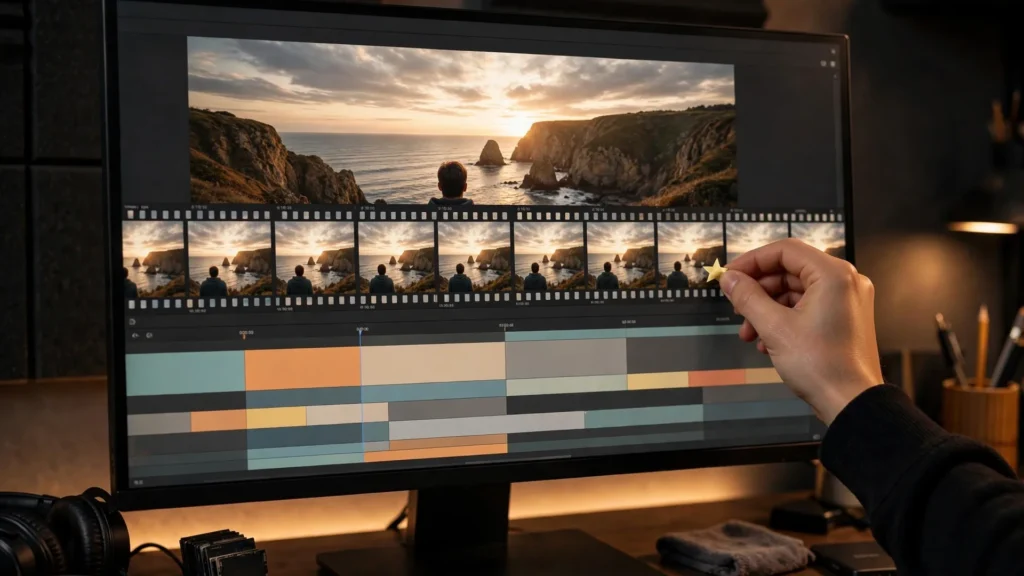
How many generations does it normally take you? Every AI creator gets this question, and most of us mumble something vague. Because the honest answer feels like an admission. So let’s say it plainly: multiple retakes are normal. They are the process. The creators posting flawless work are not one-shotting it — they’re just not showing you the nine takes in the bin.
The real question isn’t how many retakes. It’s where your personal line sits: which defects you ship, which you fix, and which send you back to generate again. This article is about building that line deliberately — instead of re-deciding it, anxiously, on every single clip.
The Two Failure Modes: Ship-It-All And Never-Ship
Creators fail at quality in two opposite directions. And I have personally failed in both.
Ship-it-all is posting first generations. The face drifts a bit, a hand does something odd for half a second, whatever — post it, volume is king. The problem isn’t one flawed clip. It’s the reputation math. Audiences may not articulate defects, but they feel them, and “that AI page” is a label that sticks. Cheap-looking posts train your audience to expect cheap. Recovery takes longer than the time you saved.
Never-ship is the perfectionist trap, and it’s sneakier because it feels like standards. Fourteen generations chasing a flawless close-up. A finished video sitting in drafts for a week because frame 112 has a suspicious finger. Meanwhile the account posts nothing, the algorithm forgets you, and the skills that only come from posting — pacing, hooks, reading an audience — never develop. Unposted perfection has a view count of zero. Every time.
Between those two failure modes is a working threshold: a standard you’ve decided in advance, applied calmly, shot by shot. Everything in this article is about where that line reasonably sits for different kinds of work — and how to know when you’ve stopped polishing quality and started hiding from publishing.
Threshold By Platform And Format
Not all posts deserve the same scrutiny, and pretending they do is how never-ship wins. Match the threshold to how the work will actually be watched.
Short-form vertical (Reels, Shorts, TikTok-style feeds): the audience is on a phone, moving fast, watching at arm’s length with the next video one swipe away. Your threshold here: no defect that’s visible at full speed in the first three seconds, no face that becomes a different person, no text that melts. Small stuff that only appears on frame-stepping — a brief edge shimmer, a minor background wobble in second five — is acceptable, because the viewing conditions will never expose it. Polish the opening, be pragmatic about the rest. Understanding aspect ratio and framing helps here too: tighter vertical framing hides a surprising amount of background sin.
Long-form and TV-watched work: raise everything. Bigger screen, longer scrutiny, viewers who pause. Face stability, text, and backgrounds all get the strict standard. This is where the full frame-by-frame audit earns its time.
Client work: the strictest threshold of all, and it isn’t yours to set alone — it’s set by the client’s brand and the contract. Someone will watch your deliverable on a big screen in a meeting room, pausing at the worst frame. Because that’s what meeting rooms do. Budget the retakes into the quote, use a formal revision workflow, and keep verdict notes so “why is the hand like that in shot 6” has a documented answer.
Experimental and process posts: behind-the-scenes, tests, “watch me try this tool” content. Here the threshold drops on purpose — the audience came to see the process, rough edges included. Posting a flawed-but-honest test can build more trust than another polished piece. Just label it as what it is.
The Three-Second Rule For Visible Defects
My most-used threshold tool is stupidly simple: if a defect is visible to a normal viewer within the first three seconds at full speed, the shot doesn’t ship as-is. Three seconds is roughly how long a feed viewer gives you before deciding — and a defect in that window isn’t a blemish. It’s the first impression.
Notice the qualifiers, because they do the real work. Visible to a normal viewer: not to you, frame-stepping, after six hours of editing. You’ve lost normal eyes by then — everything looks broken to a tired editor. At full speed: if it only exists paused, it’s below the line for short-form. First three seconds: a glitch at second eight of a fifteen-second clip is a fix-it-if-cheap problem, not a regenerate-the-shot problem.
Beyond three seconds, I grade defects by fix cost:
- Trim it — defect lives in the head or tail frames. Nearly free. Always do it.
- Crop or cut it — a hand moment, a background morph. Cheap in Premiere Pro. Do it unless the crop wrecks the composition.
- Cover it — cutaway, reaction shot, graphic. Medium cost, often improves pacing anyway.
- Regenerate it — face changes identity, story beat broken, defect dead-center for two seconds. Expensive, and correct. This is what retakes are for.
A defect you can fix by trimming is not a retake. I see creators regenerate whole clips over tail drift that a nine-frame trim would have erased. Retakes are for story and identity failures. Edits are for everything else. That distinction alone probably halves the average creator’s generation bill.
Series Footage Vs Hero Footage Standards
The other axis creators forget: not every shot in your output carries the same weight. I split my work into two standards, and I apply them without guilt.
Series footage — the recurring content engine. Episodes of a running format, regular posts in a style your audience knows. Here the standard is consistent, not perfect. The audience has a relationship with the series; a minor wobble inside an episode that entertains them costs little. Retake average for my series shots: low. I’ll accept a take with a small, brief imperfection to keep the posting rhythm alive — because the series dies faster from gaps than from blemishes. Running a storyboard-first process keeps series quality even — the boards hold the standard so individual takes don’t have to be heroic.
Hero footage — the flagship. The pinned post, the ad, the client deliverable, the video you show someone who asks what you do. Here the standard is whatever it takes. Close-ups get multiple full-quality attempts. The frame audit is total. Retakes are budgeted and expected, and “good enough” gets asked out loud and answered honestly. A hero piece is your reputation in concentrated form — it should be held to the standard your reputation needs.
The mistake is applying hero standards to series footage. That’s never-ship wearing a professional costume. Or series standards to a hero piece — which is how a flagship ends up with a melted sign in the background of the one still everyone screenshots. Decide which kind of footage you’re making before you generate, and write it at the top of the project notes. Standards decided in advance get applied calmly. Standards invented mid-review become anxiety with extra steps.
Building Your Personal ‘Good Enough’ Line
All of this converges on a personal line, and yours should be written down. Not vibes — a list. Mine lives in my project template and reads roughly like this for short-form work:
- Face must stay the same person at full speed. Brief micro-drift under motion is fine.
- No readable text generated. Ever. Text gets built in the edit.
- Hands: no visible extra or fused fingers at full speed. Small-in-frame hands doing simple jobs pass.
- First frame must work as a still image.
- Nothing in the first three seconds that a fresh viewer would point at.
- Backgrounds may be simple to the point of boring. Boring is safe.
- One great performance with a fixable flaw beats three pretty takes with dead motion.
Yours will differ — a product creator’s line mentions logos and labels; a comedy creator’s line forgives anything the joke outruns. Build it from your own posting history: go back through your last twenty posts, note which defects actually drew comments or hurt performance, and which you obsessed over that nobody saw. That audit is usually liberating. Most of what we prosecute, audiences never noticed. Most of what audiences noticed, we shipped without seeing. A written line plus a basic QC checklist fixes both directions.
Then apply the line like an editor, not a judge. Shot passes the line? Ship. Fails on something patchable? Patch. Fails on identity or story? Retake — and retake with a change. Different framing, simpler action, an approved first frame. Regenerating the identical prompt hoping for mercy is not a retake strategy. It’s a slot machine.
When Perfectionism Is Really Fear Of Posting
Last section, and the honest one. Sometimes the retakes aren’t about quality at all. Posting is exposure: people will see it, numbers will judge it, the comment section gets a vote. Regenerating one more time feels safer than any of that — and the defect hunt gives the fear a respectable costume. I’ve caught myself doing it. The eleventh generation of a shot that passed my own written line at generation four.
Diagnostics that tell fear from standards:
- The defect you’re chasing isn’t on your written line. You’re inventing new rules mid-project to delay the ending.
- You can’t describe the defect to another person in one sentence. “It just feels off” after a shot passes every check is not a quality note.
- The shot count keeps growing but the posting date doesn’t move.
- You’d ship the exact same clip if it were a client’s and the deadline were today.
One pattern I see in my own verdict logs, and it might help calibrate yours: my retakes cluster. Close-ups and hands-in-action shots eat the majority of regenerations; wides, inserts, and motion-led shots pass quickly. If your retakes cluster too, that’s not a mystery to suffer through — it’s a production plan. Storyboard those expensive shot types with extra care, approve their first frames as stills before animating, and let the simple shots move fast. Creators who spread retake anxiety evenly across every shot burn out. Creators who budget it where defects actually happen get both quality and output.
Track it for a month and the number answers itself: for regular short-form work, a healthy project usually lands somewhere between one clean take and a handful of attempts per shot — with close-ups at the hungry end and simple shots passing fast. Any creator claiming one take for everything is either making very simple shots or shipping what they’re given. Any creator consistently past ten attempts on ordinary shots has a prompting or framing problem, not a luck problem. Your bin count is diagnostic information. Read it.
The cure isn’t lowering standards. It’s enforcing the ones you set, in writing, when you were calm — and letting the post teach you what to raise next time. Published work with a known wobble outperforms unposted perfection in every currency that matters: skill, audience, income. Set the line where your platform and format justify it, retake for story and identity, fix the rest in the edit, and post the thing. The bin full of retakes isn’t failure. It’s what the process looks like from the inside — for everyone.