
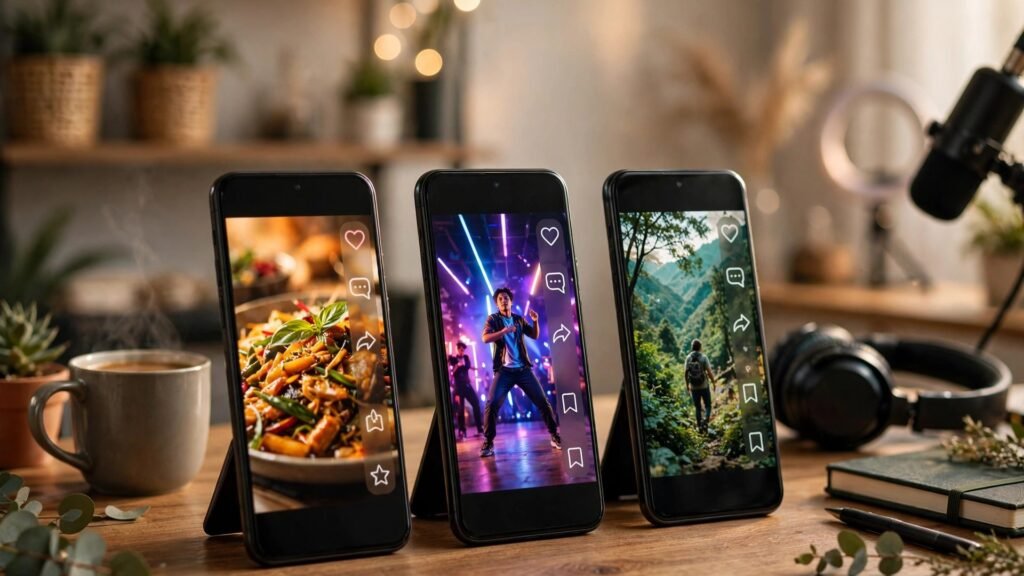
Here is the mistake I see AI creators make every week: they generate one video, post the exact same file to YouTube Shorts, TikTok, and Instagram Reels, and then wonder why it takes off on one platform and dies on the other two. I used to do the same thing. The fix was not better prompts or better tools. It was accepting that these three platforms are three different games with three different rulebooks — and that a real AI video platform strategy means adapting the same core idea to each one instead of copy-pasting.
This is my complete 2026 playbook: what actually differs between Shorts, TikTok, and Reels for AI-generated video, and the specific format, hook, length, and posting decisions I make for each.
The Three Platforms at a Glance
Before the tactics, the landscape. All three platforms show vertical short-form video, but they reward different behaviors:
- YouTube Shorts lives inside YouTube, the world’s second-largest search engine. Shorts can run up to 3 minutes, and they feed a subscriber system — people can follow your channel from a Short and then watch your long-form videos. Discovery blends the Shorts feed with search and suggested video.
- TikTok is a pure discovery machine. Uploads can run up to 10 minutes, but the culture is fast. The For You feed is famously willing to show a brand-new account to thousands of strangers if the early signals are strong. There is no subscriber feed that matters the way YouTube’s does.
- Instagram Reels sits inside Instagram’s social graph. Reels run up to 3 minutes. Discovery mixes the Reels feed with what your followers and their network engage with — existing audience and shareability carry more weight here than on TikTok.
The practical takeaway: TikTok is the best place to get discovered from zero, YouTube Shorts is the best place to convert viewers into long-term subscribers, and Reels is the best place to deepen an existing audience. Your AI video platform strategy should assign each platform a job instead of treating them as interchangeable.
YouTube Shorts Playbook
Format and Length
Shorts support up to 3 minutes, but the sweet spot for AI content is 20 to 45 seconds. YouTube viewers arrive with a search-and-subscribe mindset, so slightly more substantive AI videos — quick tutorials, before-and-after transformations, mini explainers — perform well. Anything that makes someone think “I want more from this creator” wins, because the subscribe button is right there and it actually means something on YouTube.
Technical note: export in 9:16 at 1080×1920. YouTube recompresses aggressively, so give it the cleanest possible file — my export settings for short-form walk through the exact render settings I use.
What the Algorithm Rewards
Watch time and, critically, the “viewed vs. swiped away” decision in the first seconds. YouTube has stated that Shorts performance is driven by viewer choice in the feed — every swipe is a vote. For AI videos this means your opening frame must read instantly at thumbnail size. A confused first frame on an AI video (morphing faces, muddy composition) gets swiped before the viewer even processes what it is.
One more Shorts-specific factor: your Shorts appear on your channel page alongside long-form content. A channel where the Shorts look nothing like the long videos confuses new subscribers. Keep a consistent visual identity — which is exactly what my one-shoot repurposing workflow is designed to protect.
Posting Tactics
- Titles matter more here than anywhere else. Shorts titles are searchable. Write them like search queries: “AI robot morning routine” beats “day in my life pt. 47.”
- Post 1–2 Shorts daily while testing, then settle into whatever cadence you can sustain for months. Consistency beats bursts.
- Pin a comment with context or a question — Shorts comments drive meaningful engagement signals.
- Link Shorts to long-form with Related Video links when you have a longer version. This is Shorts’ superpower: no other platform converts short viewers to long watchers this well.
TikTok Playbook
Format and Length
TikTok culture is the fastest of the three. The dominant AI format is 7 to 20 seconds: one idea, one payoff, loopable. TikTok’s player loops videos by default, and loops are a quiet ranking input — a video that gets watched twice in a row tells the system something. Design your ending to flow back into your opening and you get free replays.
Sound is non-optional on TikTok in a way it is not elsewhere. A huge share of discovery happens through sounds. When you post AI videos, spend as much effort on the audio — trending sound, original sound design, or voiceover — as on the visuals.
Discovery Mechanics
TikTok tests every video on a small audience first and expands reach based on completion rate, replays, shares, and comments. For AI creators this is both an opportunity and a filter: the system does not care about your follower count, but it is ruthless about the first 200 viewers. If they swipe, you are done. This is why the first 2 seconds deserve more production effort than the other 18 combined.
Hashtags on TikTok function as categorization more than discovery these days. Use 3–5 relevant ones, including niche tags for your AI subgenre, and skip the giant generic tags — they add noise, not reach.
Posting Tactics
- Volume is a strategy here. TikTok rewards creators who post 1–3 times daily during growth phases. AI generation makes this cadence realistic — use a batch editing workflow so volume does not destroy quality.
- Reply to comments with video. TikTok’s video-reply feature turns your comment section into a content pipeline and signals strong engagement.
- Post natively. TikTok can detect recycled content with other platforms’ watermarks and limits its reach. Always upload the clean master file.
- Test hooks as variants. Post the same AI video with three different opening seconds across three posts and keep the winner’s hook formula.
Instagram Reels Playbook
Format and Length
Reels run up to 3 minutes, but the performing band for AI content is 15 to 40 seconds. Instagram’s audience skews slightly toward polished, aesthetic content — AI videos with strong art direction, satisfying transformations, and clean design language tend to travel further here than raw or chaotic clips.
Reels also live on your profile grid permanently, next to your photos. Think of each Reel as a portfolio piece, not a disposable post. This permanence changes what you should publish: slightly higher production value, evergreen concepts, and a consistent look across your grid.
What Works Differently Here
Shares and saves carry outsized weight on Instagram. A Reel that gets sent to friends in DMs is Instagram’s strongest signal — it means the content was worth a personal recommendation. For AI videos, the most shareable formats are: satisfying process videos, impressive transformations, funny character moments, and “wait, that’s AI?” reveals.
Captions matter more on Reels than on TikTok. Instagram users actually read them, and the platform indexes caption text. Write 2–3 lines with real keywords, not just emojis — and style your on-screen text properly with the techniques in my caption styling guide.
Posting Tactics
- 3–5 Reels per week is plenty. Instagram punishes neither low nor high volume, but your grid is your brand — quality over quantity.
- Use Instagram’s own editing tools for at least part of the process. The platform subtly favors content created with its native features.
- Cross-post Stories. Share each Reel to Stories in the first hour to seed initial views from your existing followers.
- Collaborate and remix. Instagram’s Collabs feature puts your Reel on two profiles at once — the fastest legitimate reach multiplier on the platform.
Hooks: What Changes Per Platform
The hook principle is universal — the first 2 seconds decide everything — but the execution differs:
- Shorts: lead with the promise. Text or voiceover stating what the viewer will get: “Watch this sketch become a cinematic scene.” YouTube viewers decide with intent.
- TikTok: lead with the moment. Start mid-action, mid-transformation, mid-sentence. TikTok viewers decide with reflexes — curiosity gaps and pattern interrupts win.
- Reels: lead with the aesthetic. The most beautiful or most satisfying frame first. Instagram viewers decide with taste.
Same AI video, three different opening seconds. This single adaptation is the highest-leverage move in your entire AI video platform strategy, and it costs you ten minutes in the edit.
One Video, Three Cuts: The Repurposing Workflow
Here is the practical workflow that makes platform adaptation sustainable. I generate and edit one “master” AI video per idea — full quality, clean, no platform-specific elements. Then I cut three versions:
- The Shorts cut: searchable title baked into the concept, clear promise in the first second, end card pointing to the channel.
- The TikTok cut: tightest edit, loop-friendly ending, trending or original sound mixed hot, no watermarks, posted natively.
- The Reels cut: most polished grade, designed thumbnail frame, keyword-rich caption prepared, aspect-safe for the profile grid.
The master-first approach means you generate once and adapt three times, instead of generating three times. If you have not built this pipeline yet, my TikTok monetization guide is a useful reminder of why platform-native effort pays — each platform monetizes differently, so each deserves its own cut.
What to Track on Each Platform
Do not judge all three platforms by the same numbers:
- Shorts: average view duration, subscribers gained per Short, and click-through to long-form. A Short with modest views that converts subscribers is worth more than a viral one that converts nobody.
- TikTok: completion rate, replays, and shares. Profile visits matter too — they show intent beyond the swipe.
- Reels: shares, saves, and follower growth. A Reel with high saves has evergreen value; keep making that format.
Review these weekly, not daily. Daily numbers are noise; weekly numbers are signal. When a format wins on one platform for three weeks straight, that is your cue to double down — and to test whether the same format, re-cut, wins on the other two.
The Bottom Line
YouTube Shorts, TikTok, and Reels are not three upload buttons. They are three audiences, three discovery systems, and three definitions of what “good” looks like. The creators winning with AI video in 2026 are not the ones with the best generator — they are the ones with the best AI video platform strategy: one strong idea, three deliberate cuts, and the discipline to let each platform’s data teach them what to make next. Start with the platform where your style already fits, master its playbook, then expand. That is how a single AI video becomes three assets instead of one upload.