
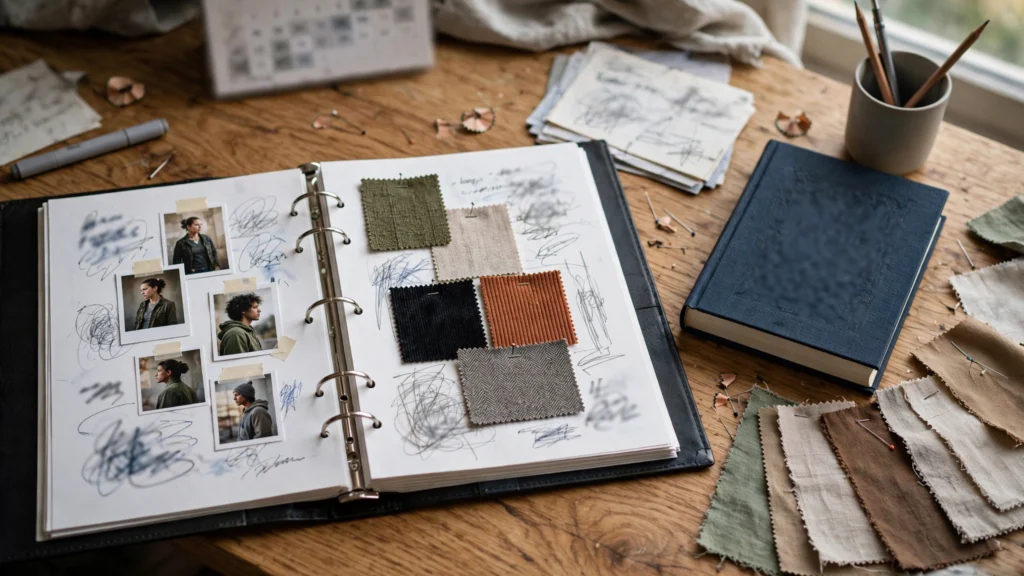
A single AI video can survive on memory. A series can’t. By episode six, nobody honestly remembers whether the café chalkboard sat left or right of the door, whether her coat was olive or brown in poor light, or which location frame the client approved back in episode two. Then every new episode quietly re-invents the world, and viewers feel the wobble even when they can’t name it.
In my pipeline, series work runs on one document that ends the re-inventing: the continuity bible. It’s not glamorous. It’s the reason episode twelve still looks like episode one.
Think of the bible as the project’s memory, written down. Character sheets live in it. Location sheets live in it. The rules and the mistakes live in it too. Every prompt for a new episode starts from this document — not from a blank page and a hopeful recollection.
Why Series Drift Compounds
Drift in a single video is a nuisance. Drift across a series is compound interest working against you. Shot three borrows its description from shot two instead of from the locked sheet, so the jacket loses a pocket. Episode two copies episode one’s prompt, pocket still missing, and the scarf changes colour. Episode five is prompted from episode two’s footage. Now the character has genuinely become a slightly different person, and no single generation looks wrong enough to flag.
AI models accelerate this because they happily average whatever you feed them. Feed a model your drifted output as the new reference, and it treats the drift as truth. Within a few cycles the series has slid somewhere nobody chose. The audience reads it as carelessness, even though each individual step felt harmless. That’s the nasty part — nothing ever feels wrong in the moment.
There’s also a plain production cost. Without a bible, every episode starts with archaeology: scrolling old exports, hunting the approved kitchen frame, trying to recall which voice settings the lead used. That’s an hour of unpaid digging before the first new prompt gets written. With a bible, episode setup takes minutes, because the answers sit in one place, in the same order, every time.
Cast Pages: Faces, Wardrobe, Voice
Give every recurring character one page, and keep the layout identical for all of them. Identical layout matters more than beautiful layout. When you’re tired, your eye should know exactly where the wardrobe line lives.
What Belongs On A Cast Page
- Locked frames: front, three-quarter, and full-body stills, the actual files you upload as references, named and dated
- Face line: age range, face shape, hair, and the two or three features that must never change
- Wardrobe table: garment by garment, material, colour, and condition. “Olive canvas jacket, brass zip, worn cuffs” beats “green jacket” in every prompt you will ever write
- Voice block: if the character speaks, record how: voice source, pace, accent notes, and one approved audio sample filename
- Never list: the specific drift you have already fought. Wrong hairstyles, wrong ages, wrong garments the model keeps suggesting
That Never list is small and it earns its space. Models repeat their favourite errors. Writing the error down once, next to the character it belongs to, stops you paying to rediscover it each episode. This page discipline grows directly out of character consistency across a series practice and out of the sheet craft behind reference images for consistent characters. The bible is where those sheets stop being loose files and start being a system.
One honest trade-off. A cast page takes an hour to build properly for a lead character. That hour feels expensive in week one. By episode three it has paid for itself, because every prompt becomes a copy-and-check job instead of a writing job.
World Pages: Locations, Props, Palette, Light
Characters get the attention. Locations cause half the drift. Give every recurring place its own page, built the same way as the cast pages.
Each location page holds the approved wide and medium frames, a short dressing list (what furniture sits where, in plain words), the palette swatches with hex values, and the light rule for that space. Light deserves its own line because it’s the first thing that slides: “morning window key from left, warm practical lamp behind counter, never overhead fluorescent.” Paste that line into prompts and the room starts agreeing with itself across episodes.
Hero props get mini-pages or a shared props page, depending on how much they matter. A product that appears in thirty shots deserves the full treatment: isolated frame, in-hand frame, scale note, logo note, and the exact locked description. A background chair deserves one line. Spend bible effort in proportion to screen time, not in proportion to how interesting the object is to build.
A Short Location Page, Filled In
To make this concrete, a café page in our working format reads like this in structure. Frames: LOC_cafe_wide_v03_KEEP, LOC_cafe_medium_v02_KEEP. Dressing: counter camera-right, chalkboard left of door, three pendant lamps, no plants on tables. Palette: warm oak, deep green tile, cream wall, brass. Light: morning, window key left, pendants as warm practicals. Sound note: room tone bed name for the Premiere template. Short, specific, and copyable. That’s the whole style of the document.
Rules Page: What Never Changes On This Show
Near the front of the bible, keep one rules page. This is the show’s constitution, and it should fit on a single screen. Rules are the decisions you refuse to renegotiate mid-series:
- Master format and safe framing, for example 9:16 with faces kept out of platform UI zones
- Look anchors: the three frames that define the grade and texture
- Text rule, stated plainly. On our shows, readable text is built in Premiere, never generated
- Performance rule, such as one speaker per shot for dialogue scenes
- Wardrobe and location change protocol: changes happen on screen, in a story beat, or not at all
- Approval rule: no frame animates before it passes the still gate
Rules pages work because arguments end there. When a client, a collaborator, or your own tired brain suggests a shortcut in episode nine, the rules page answers in the voice of the person who set up the show properly in week one.
I revise rules rarely, and I date every revision. Quiet, unrecorded rule changes are just drift with confidence. And nobody wants that.
Episode Logs: What Changed And Why
Every episode closes with a short log entry in the bible. Not a diary. A production record, five minutes at the end of the episode, while you still remember what actually happened:
- Episode ID and publish date or delivery date
- New frames promoted to the bible, with filenames
- Intentional changes: new outfit, new location, ageing, season shift, and the story reason
- Problems hit and the fix that worked, in one line each
- Anything the next episode must know that is not obvious from the pages
The intentional-changes line is the one people skip, and it’s the one that saves arguments later. Series do evolve. Coats change, cafés get repainted, characters grow. The bible doesn’t forbid change. It insists change be chosen, recorded, and carried forward on purpose.
An unlogged change looks exactly like drift, and the next person on the project will helpfully “fix” your story decision back to the old version. Right? See what I mean?
Problem lines compound beautifully over a season. “Seedance softened the café chalkboard text again; keep text for Premiere” written once in episode two protects episodes three to twenty. Your bible slowly becomes a field manual for your specific cast, sets, and models, which no generic guide can give you.
Updating The Bible Without Rewriting It
The fear with any bible is maintenance. Nobody wants a second job as a librarian. The trick is that the bible updates by promotion, not by editing sessions. You never sit down to “update the bible” as a task. Instead, production events promote things into it.
When a generated frame beats the current locked frame and you adopt it in the finished episode, that frame gets promoted at episode close-out: swapped onto the cast or location page, old frame moved to a small archive strip with the date it retired. When a prompt fix proves itself twice, its wording joins the page as the locked line. When a rule genuinely changes, it changes on the rules page with a date and a one-line reason, and the episode log notes which episode first used it.
Keep retired material. Don’t delete old frames from the bible; demote them. A client asking in month four for “the original café look” is a normal event in series work, and rollback is only possible if the past stayed filed. Storage is cheap. Reconstruction isn’t.
What actually works for most solo creators is one bible per series, living in the same folder tree as the project references, opened at the start of every session by habit. It doesn’t need special software. A document with pages, or a folder of named sheets plus one rules file, both work. The format matters far less than the rule that prompts start here.
Starting A Bible Mid-Series
Plenty of series begin without a bible and feel the need for one around episode five, when drift has already moved in. Starting late is still starting, and the method is a short audit rather than a rebuild. Pick the strongest approved frame for every character and location from the episodes you’re proudest of. Promote those to locked status, even if they were never formally approved at the time.
Then build cast and world pages around them, write the rules page from the decisions those frames clearly show, and open the episode log from the next episode forward. Old drift doesn’t need documenting frame by frame. The bible governs from today, and the audit day is the last day the series gets to be vague.
One practical warning. Don’t try to make the early episodes match the new bible retroactively unless a client is paying for remasters. Freeze the bible, carry it forward, and let the catalogue show its seams honestly. Chasing the past with regeneration money is how a rescue project becomes a second production. Honestly, it’s a trap.
If your series leans on recurring locations, the world pages should borrow their light and palette rules directly from the location discipline in consistent locations in AI video, so bible wording and prompt wording stay identical. A bible that paraphrases its own prompt lines invites drift through the gap between the two versions.
Takeaway: a series stays consistent because somebody wrote the world down once and then defended that document. Cast pages, world pages, one rules page, and a five-minute log per episode. That’s the whole system. Build it in week one, promote winners into it as you go, and your episode twelve will still belong to the same show as your episode one.