
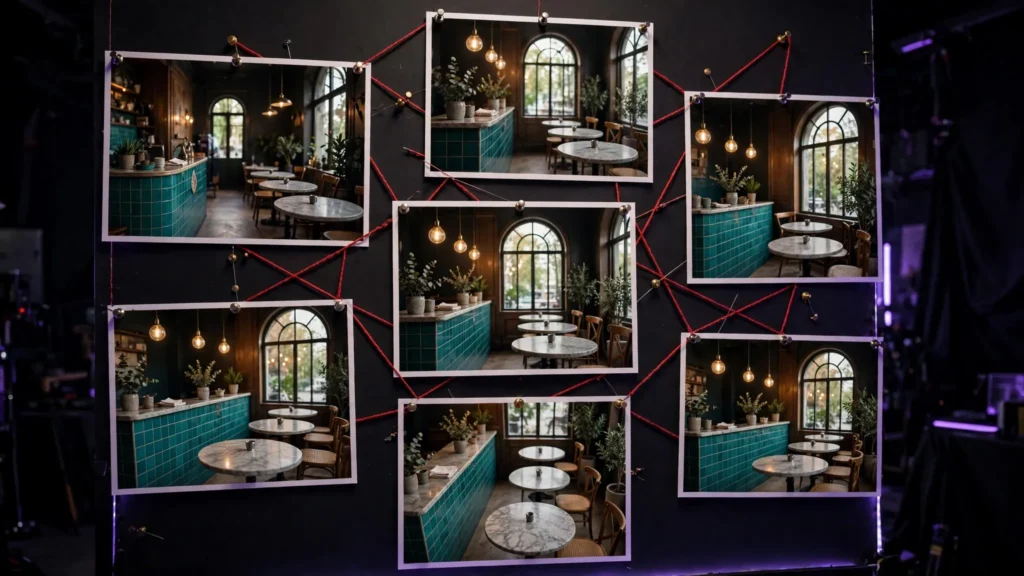
Character consistency gets all the attention, but locations betray AI series just as fast. The cafe where your character works has blue walls in episode one, brick in episode two, and a different window in every scene — and viewers feel the wrongness even when they can’t name it. Here’s the thing: a recurring place is a character. Treat it like one.
Why Locations Drift
A generator has no memory of your set between calls. Every prompt starts from your words and references alone, and words like “cozy cafe” describe a thousand cafes. Unless you pin the place down — with images, with repeated specific language, with the same inputs — the model cheerfully redecorates between shots. Lighting shifts, furniture moves, the door changes sides. Each shot looks fine. Together? They look like a dream sequence nobody intended.
The fix is the same discipline used for faces: define the location once, properly, then refuse to improvise it ever again.
Build a Location Sheet, Not a Description
For every recurring set, I make one clean master image: a wide establishing shot with no characters, no action, nothing competing with the architecture. That image captures the layout — where the counter sits, which side the window is on, what the floor and walls are made of. It becomes the anchor every later shot references. Same job a character sheet does for a face.
One sheet per location, saved with the project. Add two supporting frames if the space matters: the reverse angle, and the detail corner where close-ups will live. Generate these slowly and pick ruthlessly. This is not the place to accept “close enough” — every flaw in the master gets photocopied into fifty shots.
Feed the Set Back Into Every Shot
A sheet in a folder does nothing. The location earns its consistency by being used: referenced in every generation that takes place inside it, alongside the character references. In Seedance that means the set image travels with the cast in your reference set, so the model dresses each new shot from the same room instead of inventing a cousin of it. The mechanics are identical to the multi-shot consistency approach in keeping shots consistent — locations are simply the biggest, laziest prop in the scene.
For shots where the reference budget is tight, prioritize like this: character first for close-ups, location first for wides. A face slightly off in a wide shot hides. A room that moved does not.
Keep a Repeatable Text Block
Images do most of the work, but language supports them. I keep a saved text block for each set — the same few concrete details in the same words: “small corner cafe, teal-tiled counter on the left, three round marble tables, tall arched window at the back, warm pendant lights.” Pasted verbatim into every prompt set in that cafe. Changing the wording between shots invites the model to reinterpret the room, so the block never gets paraphrased. It’s boring. Boring is the point.
This pairs with how you maintain a character: the set block is the location’s name tag, and together they are why the character consistency method scales from a face to a whole world.
Plan the Set Into the Storyboard
Consistency gets designed, not patched. When the storyboard shows six shots in the cafe, that’s one set, one sheet, one text block — and knowing the room cold lets you direct inside it: which table hosts close conversations, which window gives you backlight, where the camera can stand for the wide. I lay that out while storyboarding the piece, because a location you’ve planned angles for stops being a background and starts being staging.
New location? It earns its own sheet before its first real shot — not after the audience has seen three versions of it.
The Limit Nobody Mentions
References hold a room together about as well as they hold a face — very well in composed shots, less well when you demand extreme angles, heavy crowds, or destruction. If a scene wrecks the set, shoot the wreckage knowing the master sheet lets you rebuild the room exactly for the next episode. That’s the real superpower here: not that the location never changes, but that you decide when it does. A series lives or dies on the viewer believing they’ve been somewhere before. Keep the sheet, feed it back, repeat the words, and your cafe stays your cafe — same teal counter, same window, every single time.