
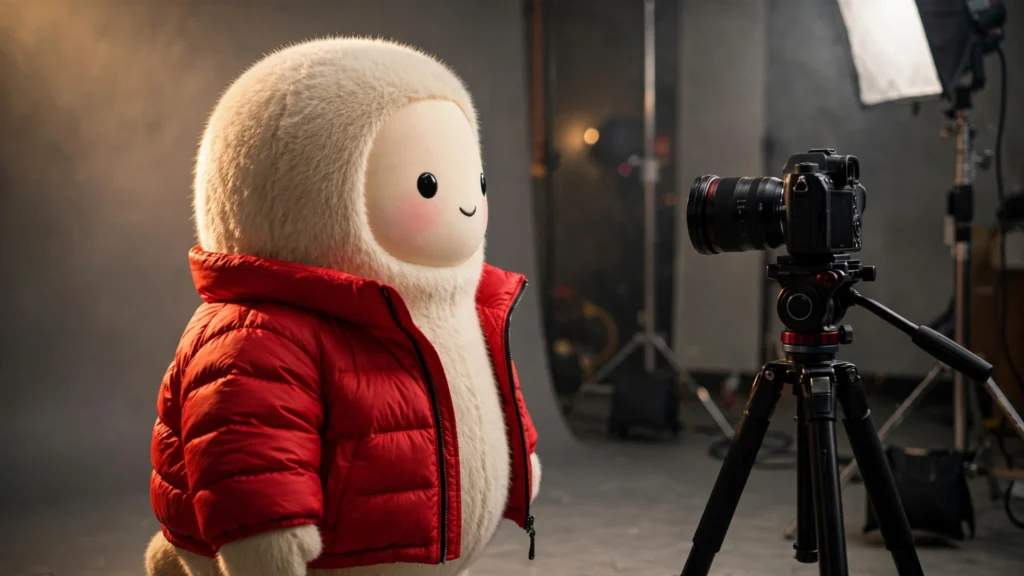
It happens to every creator eventually, and it feels like finding money. A generation comes back perfect — not acceptable, perfect. The face is alive. The light sits exactly right. The gesture lands like a real actor chose it. Your first thought is joy. Your second thought is greed: can I get this same shot again, from over there? A new angle on this take, this light, this person — without rolling the dice a hundred fresh times?
That’s the seed-locking question, and it has a real answer. A nuanced one. A locked seed carries more of a shot’s DNA than most creators realise — and far less than they hope. This article explains what a seed actually remembers, what transfers when you change the camera, how reference frames do the heavy lifting seeds can’t, and how I build per-character seed libraries in my own pipeline without fooling myself about what they are.
What A Seed Remembers (And What It Forgets)
Plain terms first. A seed is the starting noise pattern a generation grows from — the initial dice configuration. Same prompt, same starting frame, same settings, same seed, same tool: you’ll usually get the same take back, or a close sibling. Change any of those inputs and you’re asking the seed a question it may or may not be able to answer. That conditional — same tool, same settings — is not fine print. Seed behaviour is an implementation detail. It differs between tools, and it can shift between versions of the same tool. I’m writing this at the level of behaviour families, not guarantees — so test your own tool’s memory before building a workflow on it. Ten minutes of testing saves a doctrine built on sand.
What the seed broadly carries is the take’s latent weather: the composition’s leanings, the performance’s timing instincts, the way light and texture settled — a thousand small decisions that made this generation feel like this generation. That’s why a locked-seed rerun with a slightly softened prompt still often feels like family. The weather persists. What the seed doesn’t carry is anything it can be pointed at. It doesn’t know the character’s name, the room’s geography, which side the window was on. It’s not a saved scene. It’s saved luck, structured. Treating it as a scene file is the foundational misunderstanding, and every disappointment in this technique flows from it.
The practical consequence: seed locking is a take-selection tool, not a world-building tool. In my pipeline, that sentence decides where seeds sit — near the end of shot production, choosing and preserving performances — while worlds and identities are held by frames, references, and words. The rest of this article is about combining the two honestly, so the “same shot, new angle” wish gets as close to true as the technology honestly allows.
Same Seed, New Angle: What Actually Transfers
So you keep the seed and change the camera line — “same moment, now from her left side,” or a push from medium to close. What survives the move? In my experience, the things that transfer best are the global ones: palette and light mood, texture behaviour, the general performance energy, sometimes the timing of a gesture’s arc. The generation often still feels like it belongs to the same afternoon as your winning take. That family feeling is genuinely valuable — it’s most of what makes a sequence cut together as one scene rather than a collage of generations.
What transfers worst is the thing you most wish would: literal spatial continuity. The seed has no floor plan. The new angle’s room is re-imagined. The background reorganises. And the face — rebuilt from a viewpoint the original take never showed — may settle into a near-relative of your character rather than the character. The bigger the angle change, the truer this gets. A modest reframing, a slight push, a small height change: often family. A swing from front to profile, or close to wide: you’ve commissioned a new shot that shares weather with the old one. That can still be worth having. It just isn’t a camera move on a saved take — and judging it as one, expecting the bookshelf to be where the bookshelf was, leads to rejecting good generations for failing a test nothing could pass.
My honest workflow for a genuine angle change, then, is seed-plus-everything. The locked seed rides along because its weather helps. But the new angle gets its own approved storyboard frame — drawn or generated as a still, checked for the same character, same costume, same light direction — and the prompt rebuilds the shot around that frame. If the result then also shares the winning take’s feel, excellent. The seed earned its keep as seasoning. The frame did the cooking. Creators who skip the frame and trust the seed alone occasionally get lucky — and often get a stranger wearing their character’s jacket.
Pairing Seed Lock With Reference Frames
This pairing is the actual technique, so let me lay it out the way it runs in my production. The winning take gets logged — prompt, settings, seed, the take itself archived by name. From that take I pull stills: the clearest front-ish frame of the character, and a frame that shows the location honestly. Those stills join the character and location references the project already uses, following the same discipline as my character consistency work. Stills from the winning generation are unusually good references precisely because they’re the thing I’m trying to stay related to — same rendering instincts, same light, same face as generated rather than as hoped.
The sibling shot is then boarded normally: a new panel, new angle, with its first frame built or selected from those references and approved before generation. The prompt describes the new shot plainly, keeps the identity line and wardrobe wording identical to the winning shot — identical, not paraphrased, because wording drift is identity drift with extra steps — and carries the same short negative module. The locked seed gets applied where the tool allows. Then QC judges the result on the only question that matters: same person, same world, new angle? The seed is the last ingredient checked, never the first excuse accepted.
Notice what this structure does to failure. If the sibling shot drifts, I know where to look: the frame, the wording, the angle’s ambition — in that order — with the seed a distant fourth suspect. Without the structure, creators blame the seed, reroll siblings endlessly, and rebuild nothing. Reference-led, the technique is repeatable. Which is more than I can say for seed-led hope. The fuller record-keeping pattern lives in my seed control methodology; the principle here is that a seed is one line in a shot’s paperwork, never the whole file.
Prompt Changes That Keep The Family Resemblance
When you build the sibling shot, the prompt should differ from the winner’s in exactly the ways the new angle requires. No others. Change the camera line — position, distance, height — and the framing words that follow from it. Change the action only if the story beat changed; a sibling shot of the same beat should keep the same action described in the same words, letting the seed’s timing instincts rhyme across the cut. Keep the identity line, the wardrobe line, the location description, and the light description verbatim. It feels lazy. It is, in fact, the craft: every unchanged sentence is an anchor the new generation can hold, and every gratuitous rephrase is a small new roll of dice you didn’t need.
Tempting improvements are the enemy here. Midway through building shot two, you’ll want to also fix the thing that slightly bothered you in shot one — a better adjective for the light, a richer location detail. Resist it inside the sibling shot. Those improvements belong to a new setup, judged on their own. A sibling shot has one job: be recognisably the same moment from somewhere else. Purity of purpose is what lets you diagnose it later. If the light description and the angle both changed and the result feels unrelated, you’ll never know which change spent your continuity.
One more wording habit that pays off: describe the continuity itself, briefly, in the terms the tool handles best. “The same woman, still seated at the same table, seen now from her left” gives the frame and the model a shared intention. It’s not magic, and it won’t rescue a missing reference frame — but as the third layer (frame first, seed second, this line third), it nudges in the right direction. And nudges are all prompt language has ever been.
When The Seed Fights The New Angle
Sometimes the locked seed isn’t neutral. It pushes back. The composition keeps leaning toward the old framing. The performance repeats a gesture the new angle makes nonsense of. The shot feels haunted by its sibling. This happens most when the angle change is large: the seed’s weather was formed in a specific spatial arrangement, and some of that arrangement is baked into what the seed reproduces. The generation isn’t failing. It’s remembering too specifically.
The response ladder, cheapest first: accept a small reframing instead of the ambitious one — the seed often cooperates within its neighbourhood. Loosen the seed’s grip by keeping it but strengthening the new frame’s authority, where the tool offers any fidelity-versus-freedom control; the frame should outrank the noise. Or release the seed entirely and let the frame plus verbatim wording carry continuity, keeping the seed only in the log as the take’s birth certificate. That last option stings creators irrationally — the winning seed feels like a talisman. But remember what it is: structured luck from a different question. A new angle is a new question. Insisting the old answer attend is sentiment, not method — and my QC pass can’t tell the difference between a shot that kept the seed and a shot that is right. It only keeps the right ones.
There’s also a version-divergence trap worth naming. A seed locked under one model version may behave like a different seed after an update, because the machinery interpreting it changed. Libraries built on seeds therefore have a shelf life — which is the final reason frames and wording (things you own) must carry continuity, with seeds as honoured guests. Guests leave. Paperwork stays.
Building A Seed Library Per Character And Location
With expectations set honestly, a seed library is still worth keeping — as a library of takes, not of worlds. Mine lives in the project notes beside the prompt records, and each entry holds: the shot name, the approved take’s filename, the exact prompt, the negative module used, the settings that mattered, the seed where the tool exposed one, and two pulled stills (face, location). One entry, one winning take. Fully reproducible on a good day, honestly diagnosable on a bad one. When a later episode or a pickup shot needs that character in that place again, I start from the entry’s frame and wording, apply the seed, and I’m sampling from a strong neighbourhood instead of a cold open.
Per character and per location is the right filing — for the same reason the negative library is filed by failure: it matches the question you’ll actually ask. “We’re back in the café with her — what do we know?” One folder, one entry set, frames included. The entries also accumulate judgement: I note which angle changes stayed family and which fought, which seeds proved stable across sittings and which behaved like strangers on revisit. Six months in, that log is a small, private map of how your tool actually handles continuity — worth more than any general claim I could print here. Including mine. Verify on your own footage, write down what you find, and let the library be evidence rather than folklore.
So can you rebuild the same shot from a new angle off a winning seed? You can rebuild its family. Lock the seed for its weather, frame the new angle properly, keep the words verbatim where they’re not about the camera, and judge the result as kin rather than clone. Do that and a lucky take stops being a one-off accident you’re afraid to touch. It becomes the founding member of a set — which, in a storyboard-first pipeline, is all a great take has ever needed to be.